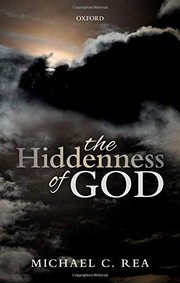
If you were to ask people on the street a question like “do you feel God’s presence?” you’re bound to get a range of responses, all the way from “OMG, yes, all the time!” to “absolutely never in my life” to “I’ve never heard of the concept of ‘God’”. It’s those latter experiences— the feeling that God does not reveal himself to us— that introduces the Divine Hiddenness argument for atheism. Essentially, the argument goes like this: if God existed, he would reveal himself to us; he obviously doesn’t, so he must not exist.
Even if you claim to encounter God, you have to admit that “God is not anywhere in the way that a child might expect”:
It is hardly surprising, then, that believers whose theology is driven by parental imagery would find the hiddenness of God deeply puzzling… What loving father would intentionally leave his children wallowing in a state of doubt and uncertainty as to his love or his very existence? What loving mother would withhold comfort from children who are suffering, and assurance of love from children who sorely need it? Loving parents tell their children—repeatedly—that they love them. They don’t leave them to infer it from the presence and orderly arrangement of toys in the basement.
— Michael Rea
A more formal version of the argument from divine hiddenness goes like this:
- If God exists, then he is necessarily all-knowing (omniscient), all-powerful (omnipotent), and all-good (omnibenevolent).
- An all-good God would want a relationship with all humans.
- An all-knowing God knows what is required for humans to be in relationship with himself.
- An all-powerful God is capable of being in relationship with all humans.
- Conceptually, God would be in relationship with all humans.
- In reality, God is not in relationship with all humans.
- Therefore, God does not exist.
The problem of divine hiddenness is very important, both in academic literature and in the lives of both the faithful and the faithless. The Problem of Evil (if God exists, why do bad things happen?) is a similar issue, but not identical. Rea argues that both problems are about “violated expectations”, and rely on hidden assumptions that, when revealed, significantly weaken them. I discuss those assumptions in sections below.
Michael Rea’s response to divine hiddenness seems to be an upgraded version of the Skeptical Theism response, which basically says that since God transcends our human experience, “we should be skeptical of our abilities to reasonably predict all of God’s plans for organizing the world”.1 Skeptical theism plays on scripture like Isaiah 55:8-9:
“Indeed, my plans are not like your plans,
and my deeds are not like your deeds,
for just as the sky is higher than the earth,
so my deeds are superior to your deeds
and my plans superior to your plans.— Isaiah 55:8-9 (NET)
Skeptical theism doesn’t take a particular stance on what God’s ultimate goals are, and neither does Rea. It could be the case that all this apparent evil, and God’s hiddenness, are serving purely human goods— that is, things that centrally involve human beings— but, God may have some other goals in mind, like divine goods we can’t grasp. I’d agree with Rea in that “I doubt that human beings are able to identify the goods for the sake of which God causes or permits the most puzzling cases of divine hiddenness”.
…even a perfect being might have non-anthropocentric loves and interests that conflict with and take higher priority than promotion of the good for human beings. If this is right, then there is no incoherence in supposing that God loves human beings perfectly but nevertheless permits divine hiddenness or various other things that cause human pain and suffering for reasons that have nothing to do with the promotion of human goods. Perhaps such things are permitted instead for the realization of legitimate and worthwhile divine goods, or perhaps other goods wholly beyond our ken.
— Michael Rea
Of course, the idea that God has goals other than human goods is a little scary.
I want God to be maximally oriented toward the promotion of my good, and I want God to have at least a very strong desire for union with me. I do not want to hear that God might balance my interests against God’s own; and I am positively disturbed to think that my own interests might well lose out in the balance.
— Michael Rea
Transcendence
The central idea here is that God is transcendent: that is, God’s existence and being is above and beyond ours. There are “low” views of transcendence that say God is very much like us, but just a little beyond; the “high” views of transcendence say that God is completely out of reach, beyond anything we can ever imagine or describe, except by analogy. Skeptical theism uses transcendence as a tool to explain that God cannot be fully understood, so his actions cannot be fully explained.
If God is basically like humans (low transcendence), it’s hard to explain why God behaves the way that he does. So, Rea adopts at least a “middle-ground” transcendence.
To put it mildly, it is very hard to see how the God of the Christian Bible can sensibly be described as unfailingly good, loving, merciful, and parental toward Israel, toward all of God’s individual children, or toward humanity as a whole if divine love, goodness, and mercy are understood according to what might be called “human” or “creaturely” standards.
— Michael Rea
…we… have reason to think that divine love and goodness are, at best, only analogically related to ordinary human love and goodness.
— Michael Rea
Supplanting Skeptical Theism
Skeptical theism is a valid solution to divine hiddenness, but… it’s just not very satisfying! A God completely beyond our grasp, conveniently outside our notions of “good” and “bad”, whose actions we can never explain but must trust anyways?
The solution thus arrived at would be akin to the skeptical theist solution to the problem of evil… I do think that this conclusion is true, and that it constitutes a genuine solution to the hiddenness problem. At the same time, however, I acknowledge that it needs to be supplemented if it is going to be a satisfying solution.
— Michael Rea
Outside of establishing the problem and the standard skeptical theism response, the bulk of Rea’s book is about various aspects of the divine hiddenness problem that weak its argumentative power.
Frequent Encounters with God
Rea argues that, unlike what we might think, we encounter God frequently. When we read Scriptural encounters with God, like Moses’s encounter with the burning bush, they feel so distant from the modern world. Of course, there are modern stories of similar miracles and visions, but we tend to discount their validity. However, Rea uses the uniformity assumption to argue that Scriptural encounters with the divine were actually a lot like ours nowadays; you and I don’t see burning bushes, but we may “feel” God’s presence, “hear” a voice (audible or not), and so on. Rea says it was the same even for Moses. Thus, God is not as “hidden” nowadays as the argument presumes.
…there is no scriptural mandate for believing that, apart from the incarnation, God has ever appeared or spoken in explicit, publicly available ways to human beings. Indeed… there is positive scriptural warrant for believing that God has never done so.
— Michael Rea
Rea’s point here, for me, falls a bit flat. It’s plausible that e.g. Moses did not see a real burning bush, and instead his encounter with God with just in his head; but this denial of physical encounters with God doesn’t really work when you consider all cases. What about Genesis 18, where both Abraham and Sarah are in conversation with God at the same time? What about Exodus 24:9-10 “Moses and Aaron, Nadab and Abihu, and the seventy elders of Israel went up, and they saw the God of Israel”? I could go on, but I just can’t affirm that “there is positive scriptural warrant for believing that God has never [appeared or spoken in explicit, publicly available ways to human beings].” Unless you deny the historicity of these Old Testament events (which most Christians aren’t willing to do), it seems you must reject the uniformity assumption. God acts differently today than he used to!
In a related point, Rea takes the position of perceptualism: when one encounters God, it is merely a perception of encountering God, rather than God literally intervening in the world (causalism). Encounters with God are still real, but they’re not directly caused by God. In Rea’s words, “all divine encounters are cognitively impacted experiences involving purely natural phenomena”. Again, I find this hard to believe, especially considering the Old Testament evidence to the contrary. In 1 Kings 18, Elijah dumps water on a pile of wood, then calls upon Yahweh to “prove today that you are God in Israel”, and God sets it on fire. Surely, this series of events cannot support the premise of an entirely perceptual encounter with God; the existence of miracles at all seem to shout in favor of causalism, at least in some cases! At best, I affirm that we can encounter God via mere perceptions, but God can (and has) also directly caused events that lead some humans to encounter God. For some reason, he doesn’t always do that (cue the divine hiddenness argument).
Divine Authorization of Lament and Protest
To lighten the burden of divine hiddenness, Rea argues that God allows us some release valves: lament and protest. He primarily calls upon the book of Job to show this.
I won’t rehash the story of Job here, but a few points are clear: firstly, the book of Job does not provide a satisfying theodicy (an answer to the problem of evil, i.e. an explanation of why God allows/causes “evil”), and theodicy is probably not the main purpose. Rather, Rea argues that Job is about establishing God’s power and dominion over creation, and it’s also about God authorizing Job’s words. Job makes statements like:
- “If I lift myself up, you hunt me as a fierce lion”
- “[God] does great things beyond our understanding.”
- “You have become cruel to me; with the strength of your hand you attack me.”
- “You pick me up on the wind and make me ride on it; you toss me about in the storm.”
And in Job 42:7, God says that Job spoke rightly of God. In what sense has Job spoken rightly, though, by making these (seemingly heretical) accusations of God? Rea’s answer is that God is authorizing Job’s protest, and God elsewhere authorizes lament (e.g. in the book of Lamentations). Job’s accusations may not be 100% accurate, but God allows Job to speak of God in these ways without punishing Job.
Rea extends his argument to plenty of instances in both the Old and New Testaments, like Abraham and Moses challenging God, or Jacob wrestling with God, or people stoning Jesus. Rea admits that “Not everyone… emerged from their enconuter absolutely unscathed” and goes on to note some of the ways God punished these human condemnations, such as Moses being unable to walk into the promised land, or Jacob ending with a limp after wrestling with God. I think it’s hard to square these “light” punishments with Rea’s conclusion that God “authorizes” condemnation, protest, and accusation of himself. I’m reminded of the “unforgivable sin” in Mark:
I tell you the truth, people will be forgiven for all sins, even all the blasphemies they utter. But whoever blasphemes against the Holy Spirit will never be forgiven, but is guilty of an eternal sin.
— Mark 3:28-29
Certainly, Jesus’s words here should at least add pause to Rea’s conclusion that we can (or should) condemn, accuse, or protest God’s actions. I concede that, in some sense, Lamentations and Job seems to authorize this language towards God, but it’s unclear to me what is acceptable to God, and what is not— after all, as Rea points out, there are several instances of humans giving protest to God and being punished for it. I would have liked to see more discussion of this spectrum.
Easy Relationship with God
Recall P4 and P5:
- An all-powerful God is capable of being in relationship with all humans.
- God is not in relationship with all humans.
Another hidden assumption in the divine hiddenness argument is its definition of relationship. The standard definition is something like a “conscious relationship”, i.e. one where both sides recognize that the relationship exists. But, is this really necessary?
Rea basically re-defines “relationship with God” to mean something so vague, I just don’t think it counts. His conclusion is that not only is it easy to be in relationship with God, but a lot of people do it without realizing it. Thus, the problem of divine hiddenness is not as bad; God can be said to be in relationship with many more humans than previously thought.
As I see it, everyone who is capable of personal relationships is able to try to seek God; and everyone who is at least receptive to a relationship with God and is willing to try to seek God (under some concept or other) automatically thereby enters into a personal relationship with God.
— Michael Rea
Rea goes further, claiming that you don’t even have to believe in God’s existence to be in a relationship with him. For example, if you love “good”, then you love God, since God is good. I suppose he is correct in the technical sense, but also, the human version of “good” doesn’t fully align with God’s goodness— so, can it really be said that one loves God if you simply love “good”?
Of course, Rea is welcome to make this move to defend God’s divine hiddenness, but it just isn’t very compelling. While he is technically correct that “trying to seek God in any way while God responds in subtle unnoticable ways” can be called a “relationship”, that’s just not the idea we have when we use the word “relationship”. However, I think his fundamental point still stands— the divine hiddenness argument does rest on a hidden assumption of what counts as a “relationship”. The divine hiddenness argument uses a very standard, human-oriented definition that makes sense to us, but perhaps God’s way to relating to us is just different, and we shouldn’t project our expectations on God (sounds like skeptical theism). Again, this is not a very satisfying solution.
Conclusion
The core of Rea’s arguments is skeptical theism, which is a perfectly reasonable position to take, especially if one is already committed to theism. As Rea puts it, both the problem of divine hiddenness and the problem of evil are “fundamentally problem[s] of violated expectations.” We have ideas of what God should be like, and if God violates those expectations, it suggests that he doesn’t exist.
If God does exist, he is transcendent by nature; the Christian Scriptures attest to this attribute. Thus, there will probably be things God does that we cannot explain as humans. The problem, of course, is that (as Rea admits) this is a very unsatisfying position to be in, and it requires a lot of faith. It requires the believer to affirm that every single instance of evil is serving some greater good in some unknown way.2 Thus, Rea offers these improvements:
- God primarily encounters humans not by directly interacting with the world, but merely from humans cognitive experiences.
- The books of Job and Lamentation show us that God authorizes lament and protest of his actions.
- It’s really easy and common to have a relationship with God; merely seeking God counts.
Overall, I wasn’t impressed with Rea’s arguments in favor of these improvements, with the possible exception of #2, divine authorization of lament and protest. Multiple times, I also found Rea’s writing to be unnecessarily dense and convoluted. Thus, the low rating should not come as a surprise.
Footnotes
-
It would be remiss of me not to remind the reader that atheism, too, requires a somewhat absurd affirmation: that God is so similar to humans, that since humans can’t explain why he does what he does, God must not have good reasons. ↩